
Who they are
Hunter-gatherers of the forest of south-western Central African Republic and northern Congo, notably around the Dzanga-Sangha reserve. Net hunting, gathering, honey, seasonal work for Bantu neighbours and logging companies.
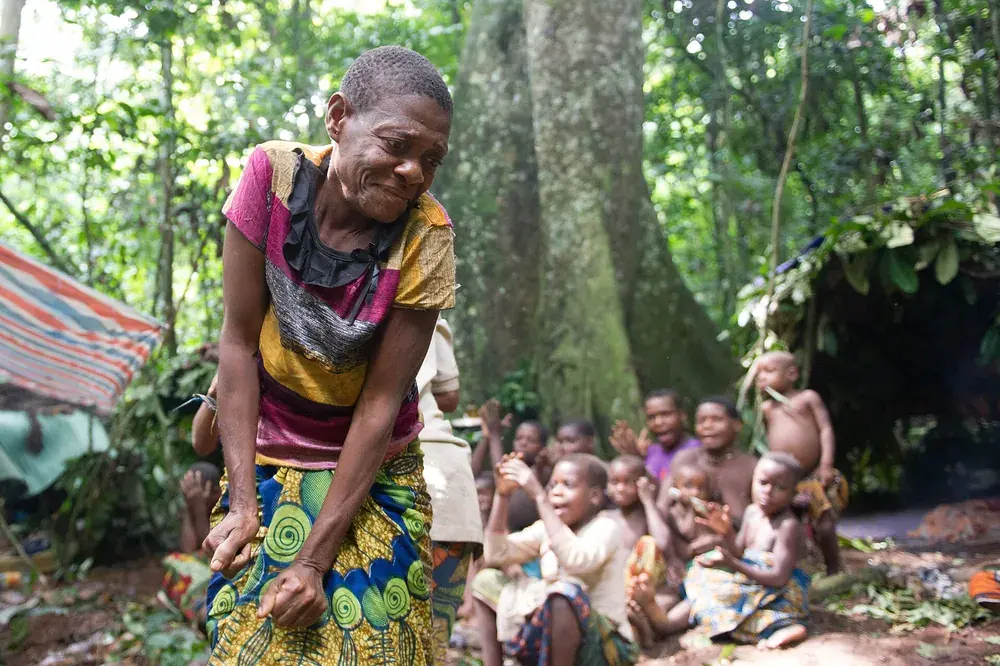
Aka / BaAka / Mbendjélé
Hunter-gatherers of the forest of south-western Central African Republic and northern Congo, notably around the Dzanga-Sangha reserve. Net hunting, gathering, honey, seasonal work for Bantu neighbours and logging companies.
Aka polyphony, four-part counterpoint with yodelling, mastered by every member of the community, accompanies the founding of a camp, the hunt and funerals; proclaimed a Masterpiece of the Oral and Intangible Heritage of Humanity by UNESCO in 2003, inscribed in 2008. An egalitarian society, immediate sharing, a relationship of trust with the forest.
UNESCO recognition; the CAR is the only African country to have ratified ILO Convention 169 (27 April 2010). Reference films (“Song from the Forest”, 2013; “Oka!”, 2011); the Ndima ensemble on international tour.
Underpaid work for Bantu neighbours and loggers, violence during the 2012-2013 crisis, HIV and tuberculosis, very low literacy; in Congo, violence by eco-guards at Messok-Dja (UNDP investigation 2020) and Odzala (partial admission by African Parks, May 2025).
Source: “Mapping of Indigenous Peoples of Africa”, Giovanny Engamba (CED), October 2026. Figures: estimates from NGOs and national censuses, to be cited as such.


Stories, a map of places, discussions and a library: it all happens in the OPAF app, with a free account.