
Who they are
Hunter-gatherers of the coastal forest of southern Cameroon, on a territory of about 12,000 km². They live in camps and roadside villages, in an exchange relationship, often unequal, with neighbouring Bantu farmers.
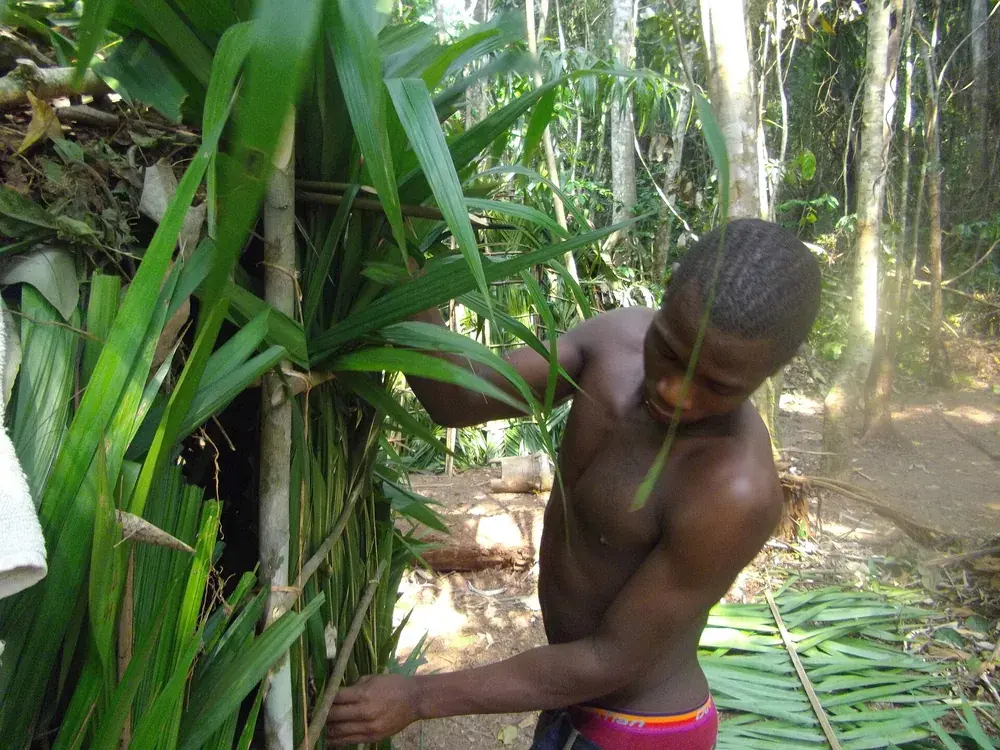
Bagyeli / Bakola
Hunter-gatherers of the coastal forest of southern Cameroon, on a territory of about 12,000 km². They live in camps and roadside villages, in an exchange relationship, often unequal, with neighbouring Bantu farmers.
The forest is both provider and sacred: net hunting, gathering, traditional medicine and initiation rites structure social life. Egalitarian organisation, decisions by consensus, an obligation to share game.
Seven Bagyeli communities, with BACUDA, APED and Forest Peoples Programme, petitioned the CERD (early warning procedure) on 29 October 2020 against the Camvert concession. Participatory mapping of territories carried out with CED and FPP since 2003. Members of the Gbabandi national platform (2016).
Hemmed in by the Campo Ma'an park, Hevecam and the Camvert plantation (60,000 ha declassified by decree 2019/4562, 1,850 ha cleared by the end of 2021; protests and arrests in Campo in January 2025). Lack of civil registration, discrimination, loss of the forest, no specific Cameroonian law on indigenous peoples.
Source: “Mapping of Indigenous Peoples of Africa”, Giovanny Engamba (CED), October 2026. Figures: estimates from NGOs and national censuses, to be cited as such.


Stories, a map of places, discussions and a library: it all happens in the OPAF app, with a free account.