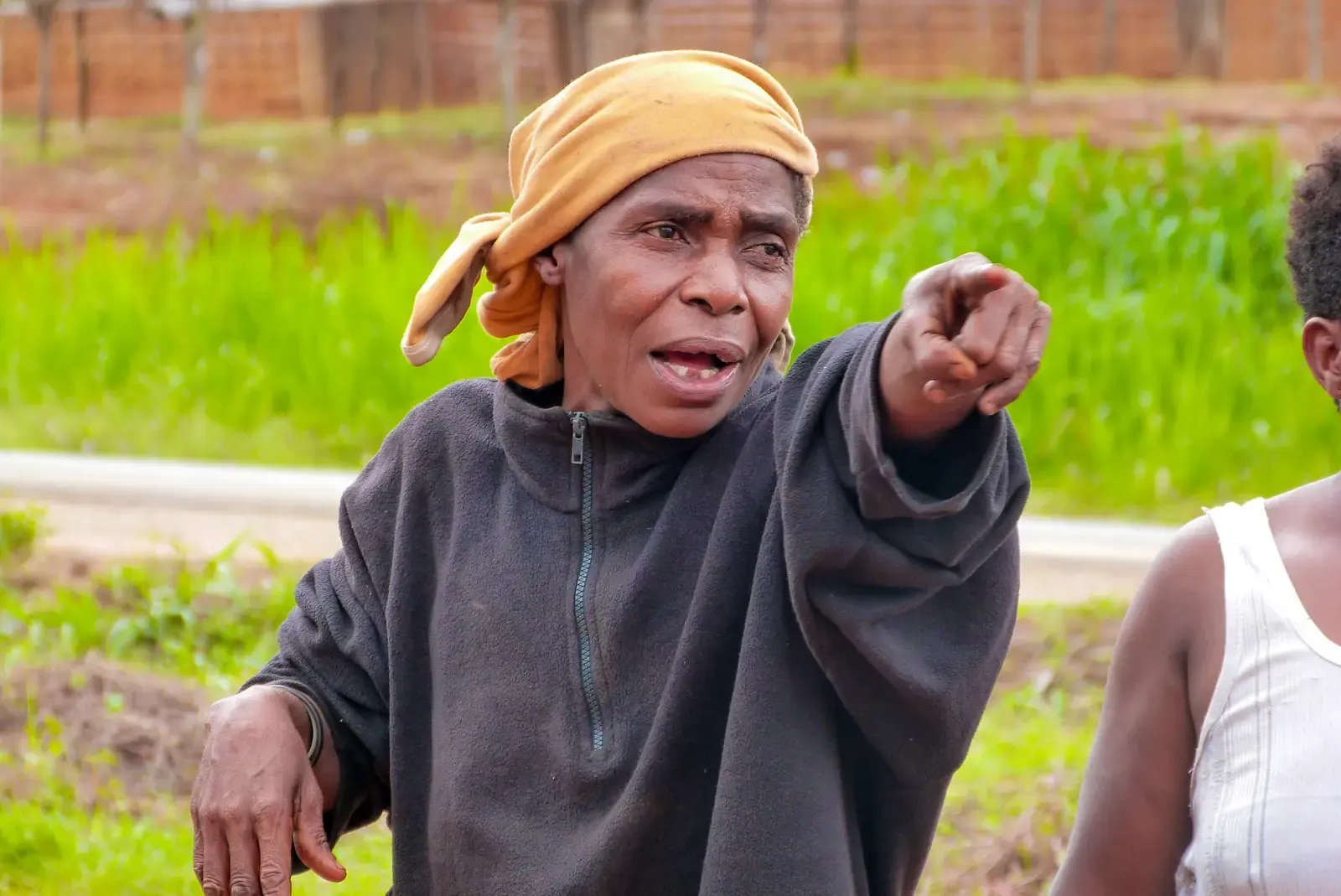
Elderly Baka woman pointing in a direction

Baka

  • Cameroon
  • Gabon
  • Congo - Brazzaville
Region
Central Africa, East and South Cameroon (Boumba-et-Ngoko, Haut-Nyong, Dja-et-Lobo), northern Gabon, north-western Congo
Estimated population
~40,000 in Cameroon (MRG); a few hundred in Gabon; present in Sangha and Likouala (Congo)
Language
Baka (Ubangian language, non-Bantu)

Who they are

Hunter-gatherers of the forest of south-eastern Cameroon, the largest indigenous forest people in the country. Hunting, gathering (wild yams, honey), fishing, and increasingly farming and wage labour for Bantu neighbours. They alternate between forest camps (honey season, major hunts) and roadside villages. The Baka speak an Ubangian language, which sets them apart from most other forest peoples of the Congo Basin.

Philosophy of life

The forest is not a resource but a being with whom one maintains a relationship of trust. Komba, the creator god, is distant; ritual life centres on Jengi (Djengui, Ejengi), the spirit of the forest, who protects the community and presides over male initiations. Egalitarian organisation without hereditary chiefs, decisions by consensus in the camp, compulsory sharing of meat, humour against boastfulness. Very fine ecological knowledge: more than 28 words for the elephant and 19 for the gorilla.

Achievements

  • Creation in July 2016 at Akonetyé (Djoum) of the Gbabandi national platform (Adebaka, Abawoni, Abagueni, ASBAK, Ascobak, Bacuda, Caddap, Buma Kpode): more than 50 Baka and Bagyeli communities across 700 km of forest.
  • 2019 memorandum of understanding between MINFOF and ASBABUK to restore Baka access to the Lobéké, Nki and Boumba-Bek parks, the first text of its kind in Cameroon.
  • Participatory mapping of customary use territories carried out with CED and Forest Peoples Programme since 2003-2007; community forests; civil registration campaign (12,000 birth certificates in 2010-2011).
  • Okani (Bertoua), an organisation founded by Baka people: community videos, monitoring of illegal logging, mapping.
  • Outreach: films by Phil Agland (“Baka: The People of the Rainforest”, 1987; “A Cry from the Rainforest”, 2012), “Pygmées Baka, le grand virage” (CNRS/IRD, 2013).

Challenges

  • Protected areas and fortress conservation: Lobéké, Boumba-Bek, Nki, Dja and Ngoyla, together with Campo Ma'an, cover more than 1.7 million hectares of Baka and Bagyeli land; twenty years after Lobéké was created, the Baka still have no access to it in practice.
  • Abuses by eco-guards: complaint by Survival to the Swiss OECD National Contact Point (2016), BuzzFeed investigation “WWF's Secret War” (2019), UNDP investigation into Messok-Dja in Congo (2020).
  • Agro-industry: Sudcam/Halcyon Agri (more than 10,000 ha cleared on the edge of the Dja, 2011-2018), logging and mining, the Lom Pangar dam.
  • Citizenship: 98 % of Baka children without a birth certificate (Plan International); an often servile relationship with Bantu neighbours; sedentarisation, alcohol, disease.
  • Legal framework: no specific Cameroonian law or decree on indigenous peoples; the only new development is Law No. 2024/008 of 24 July 2024 on forests and wildlife.

Source: “Mapping of Indigenous Peoples of Africa”, Giovanny Engamba (CED), October 2026.

Watch and listen

The Baka community on OPAF

Stories, a map of places, discussions and a library: it all happens in the OPAF app, with a free account.