
Who they are
Transhumant cattle herders who arrived in Cameroon at the beginning of the 20th century (Wodaabe, Jafun and Galegi subgroups), recognised as indigenous by the African Commission.
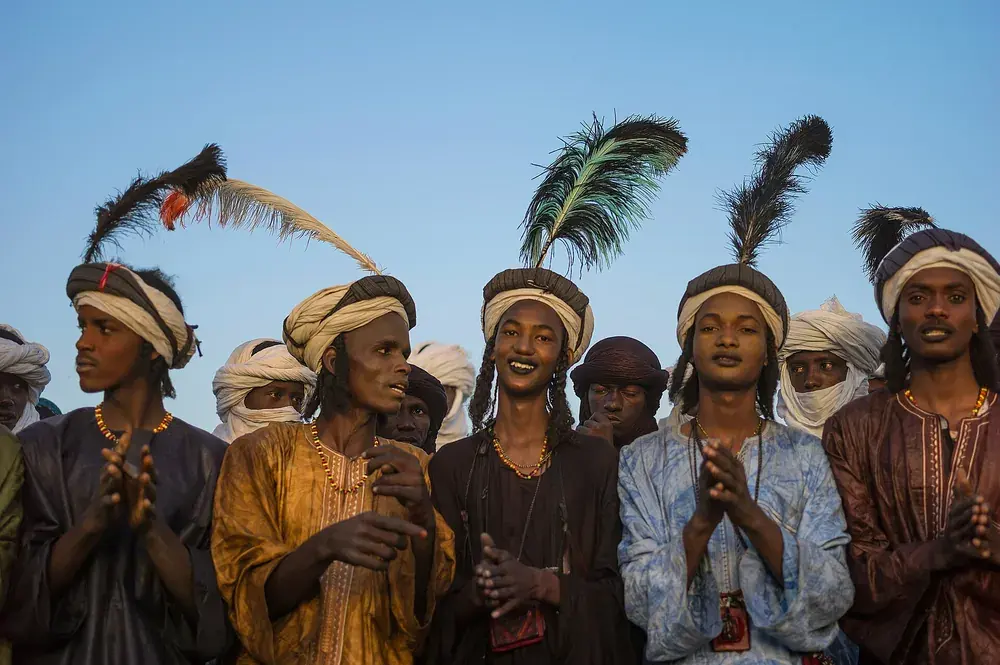
Mbororo (Peuls pasteurs)
Transhumant cattle herders who arrived in Cameroon at the beginning of the 20th century (Wodaabe, Jafun and Galegi subgroups), recognised as indigenous by the African Commission.
Pulaaku, the Fulani ethical code: modesty (semteende), patience (munyal), prudence (hakkilo), loyalty (amana). The herd of zebu is capital, identity and a bond with the ancestors.
MBOSCUDA (1992): paralegals, women’s groups, voter registration; a few Mbororo in high office. Hindou Oumarou Ibrahim (Chad), a global figure for indigenous knowledge in the face of climate change.
Grazing permits without land titles, farmer-herder conflicts, evictions by large landowners, low civil registration and school enrolment; targeted by separatists in the Anglophone crisis (Gidado massacre, 14 January 2026, 14 dead including 7 children).
Source: “Mapping of Indigenous Peoples of Africa”, Giovanny Engamba (CED), October 2026. Figures: NGO estimates and national censuses, to be cited as such.
Stories, a map of places, discussions and a library: it all happens in the OPAF app, with a free account.
